
Fleet Management
Vehicle fleets for large companies can be hard to manage and are typically split between Service and VUP vehicles, and for its majority it is composed of light vehicles. Additionally, fleet is undergoing an electrification process. Total annual spend for the is around ~18M € - split between CAPEX (~10M €) and OPEX (8M €).
The Challenge
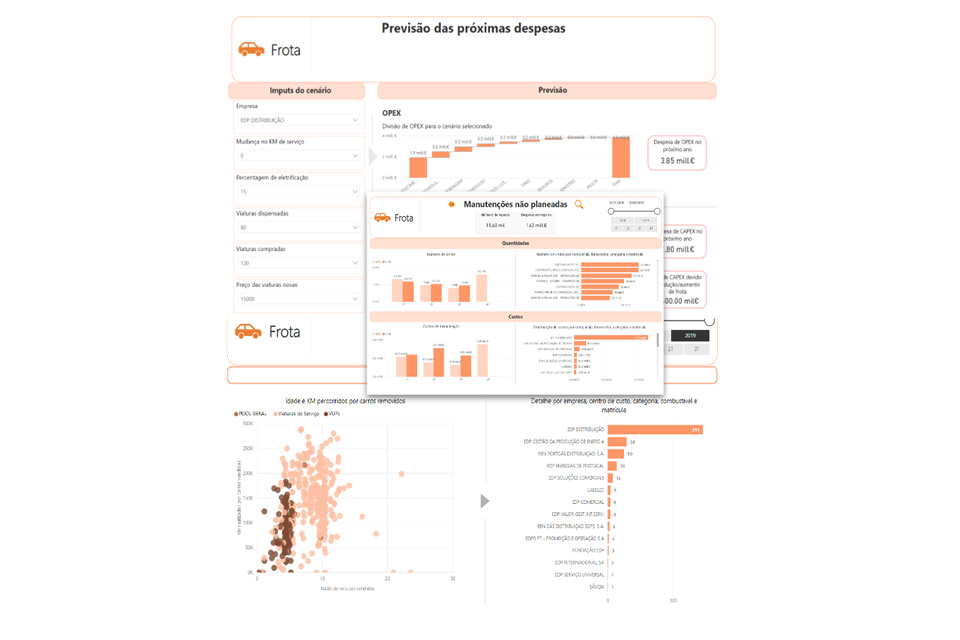
Fleet management was conducted mainly with Excel reports that
do not address all the needs of the different business actors
involved in fleet decision making, and do not allow to track
elements such as utilization, or dismissed vehicle age/km,
planned/unplanned maintenance, among other KPIs.
Approach
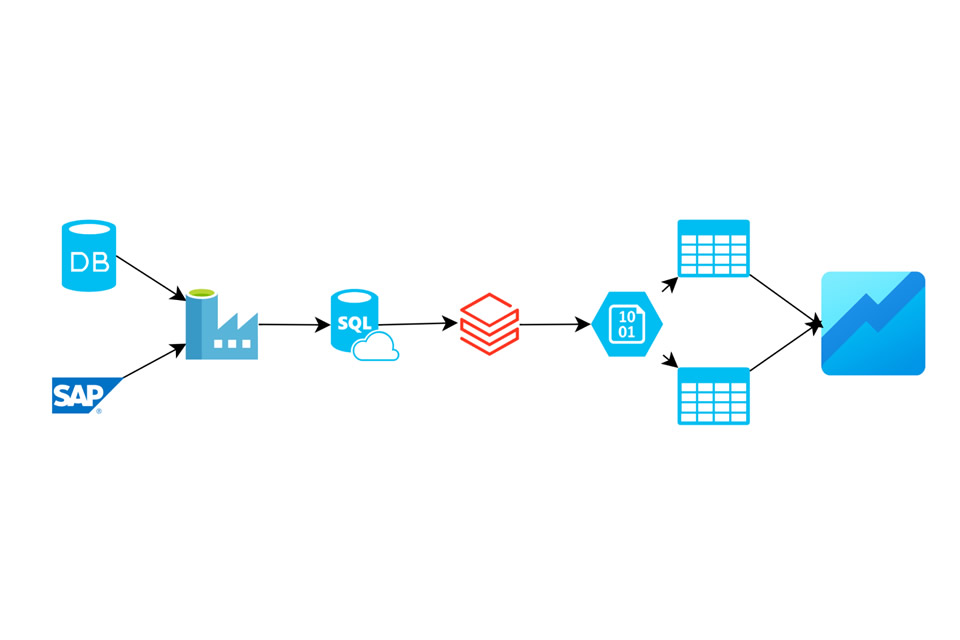
- 1. Extract data from transactional systems
- 2. Apply data anonymization and cleaning
- 3. Apply data transformations to perform aggregations, time series analysis and additional features
-
4.
Developed custom AI/ML models to perform Planned and unplanned maintenance, Refueling forecast
and deviation, Tolls validation, Tires exchange fraud detection, among others - 5. All data compiled in a “star schema” for better and easier analysis
- 6. Deliver (update) a full fledge dashboard with all Fleet monitoring KPIs
Value Delivered
The development, from an analytical perspective of vehicle fleet intends to solve three core business necessities:
1. Decision making:
The development, from an analytical perspective of vehicle fleet intends to solve three core business necessities:
- • Monthly car expenditure budgeting
- • Fleet electrification level
- • Adequate fleet size and most suitable procurement / dismissal strategy
2. Reporting:
The project is also intended to be used as a reporting tool where different business units and accounting departments can find a common ground to analyze and assess different dimensions of the fleet
3. Outlier behavior identification:
Erratic behaviors can be prompted and reported with the finest level of detail. Some examples of such behaviors that are capturable with the dashboard are the following:
- • Suspicious refueling and toll activities (weekend expenditures, excessive expenses…)
- • Recurrent repairs
- • Fast drivers on highways